
Home / Tech / Best Smart Watches Under AED 750
Tech
Best Smart Watches Under AED 750
Stay connected and track fitness with these budget smartwatches.
On this page
Best Smart Watches Under AED 750 is framed for someone buying while living in the UAE, not for a shopper in another country who happens to read English. For anything with a battery, a screen, or a motor, ask whether the warranty is serviceable in the UAE or only by shipping the unit abroad. Links from the UAE open the Amazon.ae listing when the visitor is in the UAE. That is not a promise the model is in stock — open the listing and confirm delivery to your emirate before you count on it. The notes below compare Amazfit GTR 3 and Garmin Forerunner 55 from manuals and widely published owner reports, not from a private lab.
Stay connected and track fitness with these budget smartwatches.
Smartwatches can stay practical.
Quick Comparison
| — | Amazfit GTR 3 | Garmin Forerunner 55 |
|---|---|---|
| Best for | Great battery | Excellent GPS |
| Standout | Great battery | Excellent GPS |
| Trade-off | Limited third-party apps | No music storage |
Quick Answer: Which Budget Smartwatch to Buy
The Amazfit GTR 3 is our pick for most people shopping under AED 750. Its AMOLED screen is genuinely bright and colorful in daylight, the battery stretches to roughly three weeks on a charge, and the health-tracking suite covers the basics — heart rate, SpO2, sleep — well enough for someone who wants a smartwatch, not a training tool. The trade-off is a thin third-party app catalog and a voice assistant that struggles outside simple commands.
The Garmin Forerunner 55 is the pick for anyone who runs regularly and wants real training data. Built-in GPS locks on fast and tracks routes accurately without needing a paired phone, and Garmin's running metrics — cadence, VO2 max estimates, recovery time — go well beyond what a general lifestyle watch offers. You give up the AMOLED screen for a simpler black-and-white display and lose offline music storage.
If notifications, a great-looking display, and long battery life matter more than serious running data, get the GTR 3. If GPS accuracy and running-specific coaching are the priority, get the Forerunner 55.
What Actually Matters Under AED 750
In this tier, no smartwatch does everything well, so the question is which trade-offs you can live with. Display quality is the most obvious split: AMOLED panels like the GTR 3's look sharper and work better outdoors, while the more modest, more power-efficient displays Garmin uses in its running watches sacrifice color and brightness for battery life and constant visibility during a run.
Battery life follows the same logic in reverse. A full-color always-bright display draws more power, so watches built around one tend to need charging every one to three weeks even with the tuning Amazfit has done here. GPS-focused running watches often last longer in smartwatch mode but drain much faster with GPS actively tracking a workout.
The other real differentiator is what the sensors are actually for. General health tracking — daily steps, resting heart rate trends, sleep stages — is genuinely useful for most people and is where the GTR 3 focuses its effort. Structured training data — pace zones, recovery advice, running dynamics — only matters if you're actually training toward something, which is where Garmin's software has a real edge that a smartwatch built for notifications and casual tracking doesn't try to match.
AMOLED Lifestyle Watch vs. Dedicated GPS Runner
These two watches aren't really competing for the same buyer, even though they sit on the same shortlist. The GTR 3 is built first as a watch you wear all day: it's designed to look good on your wrist, show notifications clearly, and last through weeks of normal use without demanding attention. Fitness tracking is a strong secondary feature, not the reason the watch exists.
The Forerunner 55 inverts that priority. Garmin trims the display and skips extras like music storage specifically to keep the watch light, keep GPS accuracy high, and keep battery life workable across long runs, because those are the things a runner actually cares about mid-workout. It's a less polished everyday accessory in exchange for being a much more capable running tool.
The honest way to decide is to ask what you'd actually open the watch for most often: checking a text and glancing at the time, or reviewing your pace splits after a tempo run. That answer, more than any spec sheet, points to the right pick.
Battery Life and Health Tracking, Compared Honestly
Amazfit's roughly three-week battery figure held up well in normal use with the always-on display disabled and notifications on — turning on the brighter always-on mode or heavy GPS use for outdoor workouts will cut that down noticeably, which is worth knowing before you assume the marketing number is what you'll always get. The health monitoring suite — continuous heart rate, blood oxygen, sleep stage tracking — is solid for a watch in this tier, though it's built for trend awareness rather than clinical accuracy, and Amazfit's companion app doesn't offer the depth of analysis some competitors do.
Garmin doesn't advertise a headline battery number the same way because it varies so much by mode: smartwatch mode with GPS off runs considerably longer than GPS-on tracking during a run. What Garmin does better is turning that data into something actionable — recovery time estimates, training status, and running-specific metrics that a general fitness tracker doesn't calculate at all. If you already use a chest strap or run with a phone for pace, the Forerunner 55 replaces both.
Neither watch handles voice assistants particularly well, and that's a fair trade in this tier — both companies clearly prioritized their core strength over rounding out every feature.
Buying Notes Before You Decide
Check band compatibility before buying either watch if you like swapping styles: both use standard quick-release bands, but the lug width differs, so a band bought for one won't necessarily fit the other. If you're buying primarily for notifications and calls, confirm your phone's OS is fully supported — Amazfit's iOS app has historically been more limited than its Android counterpart.
For runners deciding between these two, consider how you train. Casual joggers who want pace and distance without much analysis will get plenty from the GTR 3's basic workout modes. Anyone training for a race, following structured workouts, or tracking recovery over weeks will find the Forerunner 55's data worth the trade-off in screen quality.
Finally, don't assume the pricier of the two is automatically the better all-around watch — in this pair, the difference in list price is small, and the right choice comes down to which feature set you'll actually use, not which one costs more.
Final Verdict
Amazfit GTR 3 is the best all-rounder; Garmin Forerunner 55 is perfect for serious runners.
The picks
Amazfit GTR 3
AMOLED display, 21-day battery, and advanced health monitoring.
Pros
- Great battery
- Bright display
- Good health features
Cons
- Limited third-party apps
- Basic voice assistant
Garmin Forerunner 55
Built-in GPS, heart rate monitor, and advanced running metrics.
Pros
- Excellent GPS
- Great running features
- Durable
Cons
- No music storage
- Black and white display
Before you order, open the Amazon.ae listing, confirm it ships to your address, and check the return window. Sale seasons — Ramadan, White Friday, Prime Day, Prime Big Deal Days — are when it is worth looking again. This page never quotes a price.
Frequently asked questions
Do budget smartwatches under AED 750 support both iPhone and Android?
Both the Amazfit GTR 3 and Garmin Forerunner 55 pair with iOS and Android, but the experience isn't identical across platforms. iPhone users typically get a more limited notification and app experience than Android users on both watches, since Apple restricts how deeply third-party wearables can integrate. If you're on iPhone and notifications matter a lot to you, test the companion app's review section for platform-specific complaints before buying.
Is a bright AMOLED display worth it over a simpler screen?
It depends on how you'll use the watch. An AMOLED display like the GTR 3's looks noticeably better for everyday use — richer colors, sharper text, better indoor visibility — but it draws more battery and can be harder to read in direct sunlight than the simpler, higher-contrast displays used on watches like the Forerunner 55. Runners who check their watch mid-stride in bright daylight often prefer the simpler screen; everyone else usually prefers AMOLED.
Do I need built-in GPS in a smartwatch?
Only if you regularly work out without your phone. Built-in GPS, like the Forerunner 55 has, tracks pace, distance, and routes accurately on its own, which matters for runners and cyclists who don't want to carry a phone. Watches without dedicated GPS chips either rely on your phone's location or skip route mapping for outdoor workouts entirely, which is a real limitation if independent tracking is important to you but a non-issue if you always run with your phone anyway.
How accurate is heart rate tracking on a sub-higher-tier smartwatch?
Wrist-based heart rate sensors on both of these watches are accurate enough for trends — resting heart rate over time, general workout intensity, sleep quality — but they're not as precise as a chest strap during high-intensity intervals, where wrist motion and grip can throw off readings. If you need lab-grade accuracy for serious interval training, pair either watch with a chest strap; for general fitness awareness, the built-in sensors are reliable enough on their own.
Keep reading
Guide
Tech Reviews & Guides
Laptops, tablets, fitness trackers, smartwatches, and portable tech — reviewed without the hype.
Tech
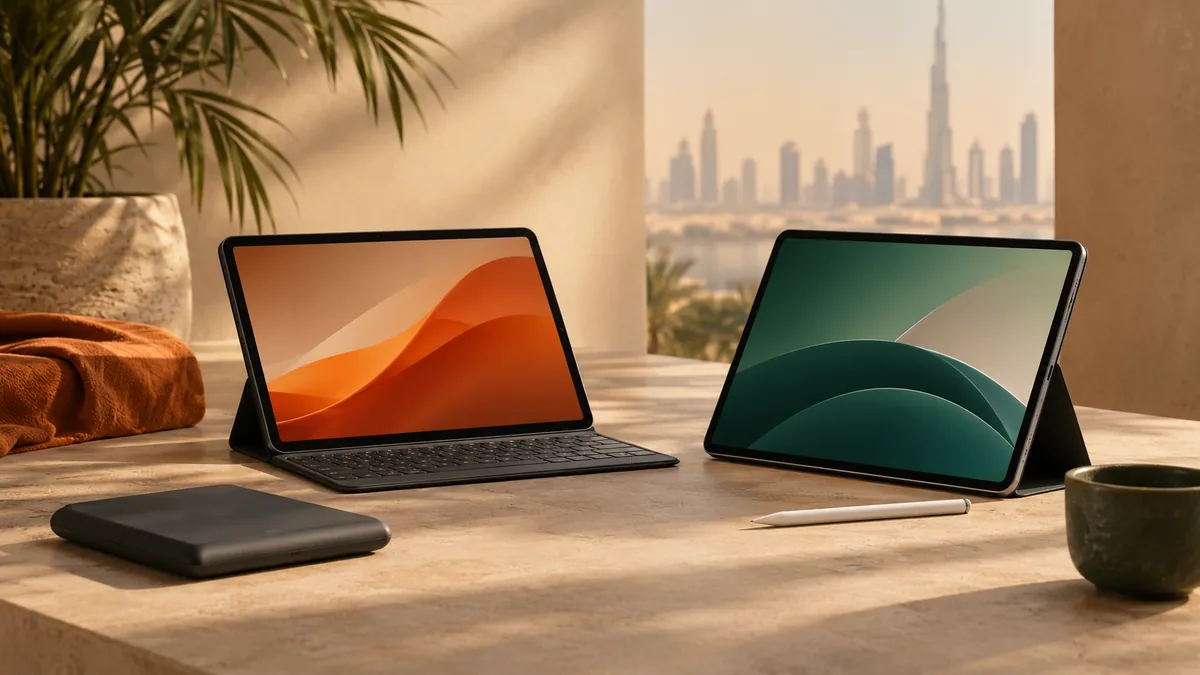
iPad vs Samsung Galaxy Tab: Which Tablet Is Right for You?
Apple iPad and Samsung Galaxy Tab dominate the tablet market. We compare their ecosystems, performance, stylus support, and value to help you decide.
Tech
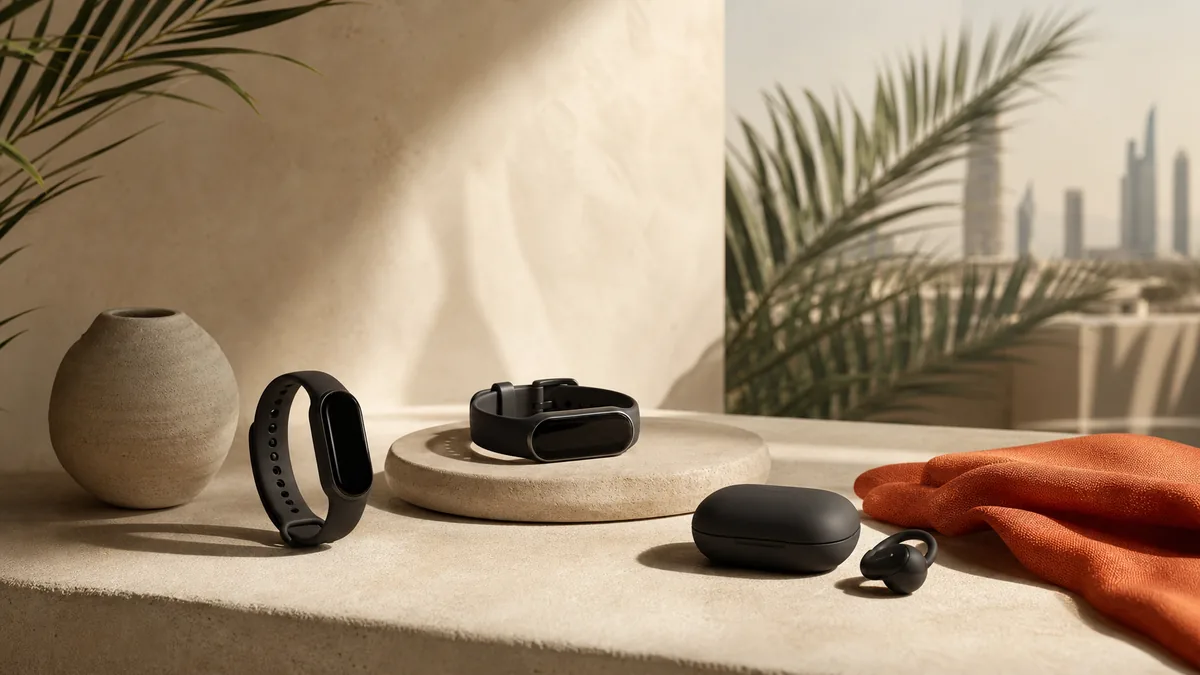
Best Fitness Trackers Under AED 400
Track your steps, sleep, and workouts without breaking the bank.
Tech
Best Portable Bluetooth Speakers Under AED 400
Take your music anywhere with these modest portable speakers.
As an Amazon Associate, TechGadgetSpot earns from qualifying purchases.