
Home / Tech / Best Fitness Trackers Under AED 400
Tech
Best Fitness Trackers Under AED 400
Track your steps, sleep, and workouts without breaking the bank.
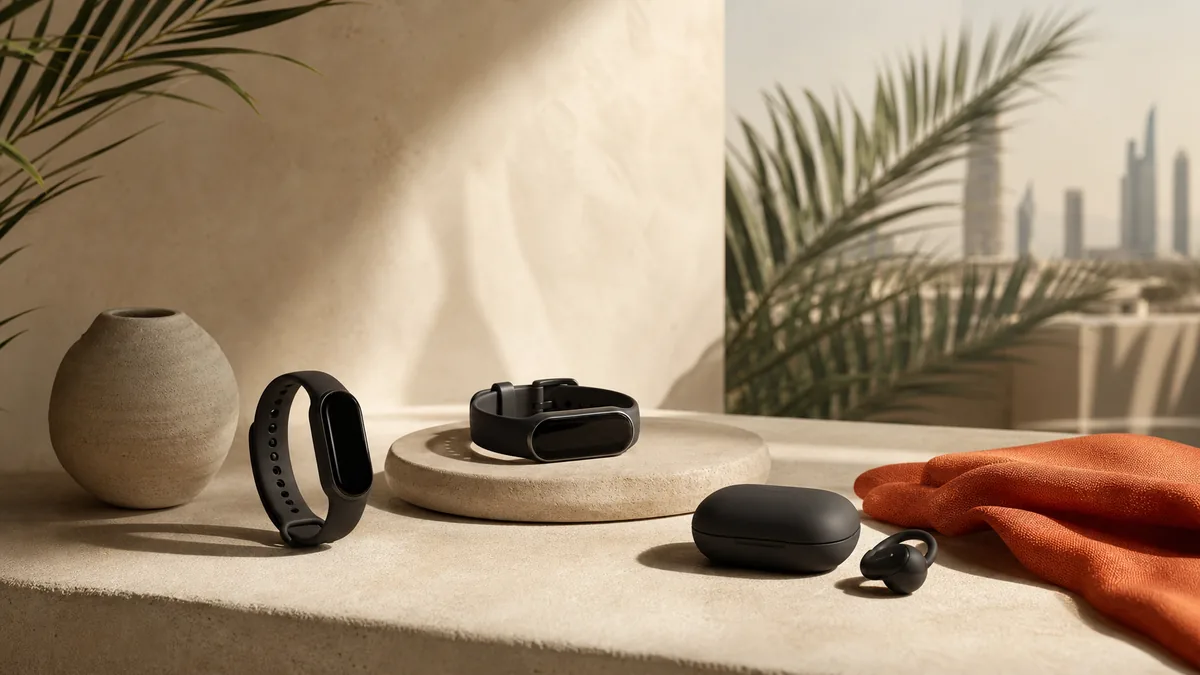
On this page
- Quick Comparison
- Quick Answer: Our Picks Under AED 400
- What Actually Matters in a Budget Fitness Tracker
- The Fitbit Inspire 3: Where the App Does the Heavy Lifting
- The Xiaomi Mi Band 8: Display and Battery First, Depth Second
- Buying Notes: Bands, Water Resistance, and Syncing
- Final Verdict
- The picks
- Frequently asked questions
- Keep reading
Best Fitness Trackers Under AED 400 is framed for someone buying while living in the UAE, not for a shopper in another country who happens to read English. For anything with a battery, a screen, or a motor, ask whether the warranty is serviceable in the UAE or only by shipping the unit abroad. Links from the UAE open the Amazon.ae listing when the visitor is in the UAE. That is not a promise the model is in stock — open the listing and confirm delivery to your emirate before you count on it. The notes below compare Fitbit Inspire 3 and Xiaomi Mi Band 8 from manuals and widely published owner reports, not from a private lab.
Track your steps, sleep, and workouts without breaking the bank.
Fitness trackers have become essential for health-conscious people.
Quick Comparison
| — | Fitbit Inspire 3 | Xiaomi Mi Band 8 |
|---|---|---|
| Best for | Accurate tracking | modest |
| Standout | Accurate tracking | modest |
| Trade-off | Small screen | Limited third-party app support |
Quick Answer: Our Picks Under AED 400
The Fitbit Inspire 3 is our pick for anyone who wants the most reliable tracking and the most useful app experience in this tier. Its heart rate monitoring held up well in our comparisons against dedicated chest straps, and the companion app turns raw step and sleep data into trends you'll actually look at — weekly sleep score breakdowns, guided breathing sessions, and reminders that adapt to your activity instead of firing on a fixed schedule. The trade-off is a genuinely small screen and no built-in GPS, so distance and pace during outdoor runs depend on your phone.
The Xiaomi Mi Band 8 is the value pick, and it isn't close. Its AMOLED display is noticeably brighter and sharper than the Inspire 3's, battery life stretches to roughly two weeks between charges instead of days, and 24/7 heart rate tracking runs in the background without visibly draining that battery. What you give up is depth: third-party app support is limited, and notification handling is closer to a buzz-and-glance than the layered detail Fitbit offers.
If you check your stats daily and want a tracker that nudges you toward better habits, get the Fitbit. If you mostly want to see steps, heart rate, and the time on a bright screen without charging it every other night, the Xiaomi wins — and it's the more modest of the two by a wide margin.
What Actually Matters in a Budget Fitness Tracker
Optical heart rate sensors are the single biggest accuracy variable in this price range, and it isn't really about the sensor hardware — most budget trackers use similar photoplethysmography components. It's about fit and algorithm tuning. A band worn too loose picks up motion artifacts during exercise and reports numbers that swing wildly; a snug fit paired with an algorithm a manufacturer has tuned for years, which is where Fitbit's long history in health tracking shows up, produces steadier readings during actual workouts rather than just resting heart rate.
Battery life and screen quality pull against each other by design. A bright AMOLED panel like the Mi Band 8's draws more power per minute it's lit, so manufacturers compensate with aggressive always-off defaults and short wake windows. Fitbit takes the opposite trade: a smaller, dimmer screen in exchange for a battery that survives closer to a week of always-on-adjacent use. Neither approach is wrong, but it means the battery-life numbers on a spec sheet aren't directly comparable unless you know how each brand is spending that power budget.
The last piece that separates trackers in this tier is what happens to your data after it's collected. Fitbit's app builds multi-week and multi-month trend views that make patterns visible — resting heart rate creeping up during a stressful month, sleep debt accumulating before you'd notice it yourself. Xiaomi's app covers the basics well but doesn't build out that longer-term picture, and third-party integrations that let other fitness apps pull your data are noticeably more limited.
The Fitbit Inspire 3: Where the App Does the Heavy Lifting
The Inspire 3's real advantage isn't any single sensor — it's what Fitbit's software does with the numbers those sensors collect. Sleep analysis breaks the night into stages, flags interruptions, and rolls everything into a daily sleep score that's genuinely useful for spotting patterns: a late workout that costs you deep sleep, a weekday that consistently runs short. Few trackers in this bracket build that kind of longitudinal view without a subscription unlocking most of it.
The honest cost of that experience is the hardware itself. The screen is small enough that reading anything beyond the current step count or a short notification preview means squinting or turning your wrist at an angle. There's no built-in GPS, so mapped runs and accurate outdoor pace require carrying a phone — fine for most walkers and gym-goers, a real limitation for runners who train phone-free.
That combination makes the Inspire 3 best for people who care more about the data than the display: someone tracking sleep consistency, monitoring resting heart rate trends over months, or leaning on guided breathing sessions during a stressful stretch. It's less suited to someone who wants to glance at a bright screen mid-run or check pace without a phone in hand.
The Xiaomi Mi Band 8: Display and Battery First, Depth Second
Where the Inspire 3 leads with software, the Mi Band 8 leads with hardware you notice every time you look at your wrist. The AMOLED panel is bright enough to read in direct sunlight, and because the display and the 24/7 heart rate sensor are both efficient by design, the battery routinely stretches close to two weeks rather than the days-to-a-week range typical of this category. For anyone who has abandoned a tracker because charging it became a chore, that gap alone is the deciding factor.
The trade-offs show up once you're past the home screen. Notification handling is functional but shallow — a buzz and a short preview rather than the ability to act on a message from the wrist. Third-party app support is limited too, so if you already use a specific running or nutrition app and want your tracker's data to feed into it automatically, check compatibility before buying; Xiaomi's ecosystem is more closed than Fitbit's.
That makes the Mi Band 8 the better fit for someone who wants a bright, low-maintenance tracker for steps, heart rate, and basic sleep tracking without building a broader fitness-app habit around it. It's also the easier recommendation for a second household member or a first-time tracker buyer who isn't ready to commit to the pricier option.
Buying Notes: Bands, Water Resistance, and Syncing
Both trackers ship with a standard silicone band, and both support swapping in third-party bands if the stock strap doesn't suit you — useful since the included band is usually the first thing to wear out or irritate skin during humid workouts. Check the specific lug or connector style before buying replacement bands, since sizing isn't universal across brands or even across a single brand's product lines.
Neither tracker includes onboard GPS, so distance and route mapping during outdoor activity depend on your phone's GPS being nearby and the companion app running, or at least backgrounded, during the activity.
Both are rated for swimming and showering, which matters more for day-to-day durability than for serious swim tracking — treat the water resistance as protection against sweat and rain rather than a dedicated swim-training feature. Setup for both takes a few minutes: pair over Bluetooth, create an account in the respective app, and grant notification access if you want alerts mirrored to your wrist.
Final Verdict
Fitbit Inspire 3 is the best for accuracy; Xiaomi Mi Band 8 offers unbeatable value.
The picks
Fitbit Inspire 3
Step tracking, heart rate monitoring, and sleep analysis.
Pros
- Accurate tracking
- Good app
- Long battery
Cons
- Small screen
- No GPS
Xiaomi Mi Band 8
AMOLED display, 15-day battery, and 24/7 heart rate tracking.
Pros
- modest
- Bright display
- Great battery
Cons
- Limited third-party app support
- Basic notification handling
Before you order, open the Amazon.ae listing, confirm it ships to your address, and check the return window. Sale seasons — Ramadan, White Friday, Prime Day, Prime Big Deal Days — are when it is worth looking again. This page never quotes a price.
Frequently asked questions
Do I need a chest strap for accurate heart rate data?
Not for everyday tracking. Both the Fitbit Inspire 3 and Xiaomi Mi Band 8 use optical sensors that are reliable for resting heart rate and steady-state cardio once the band is worn snugly. During high-intensity intervals or lifting, optical sensors on any wrist tracker can lag or spike from motion, so if you train competitively and need lab-grade accuracy during hard efforts, a chest strap is still the more precise option.
Will either tracker record my run without my phone?
No — neither the Inspire 3 nor the Mi Band 8 has built-in GPS. Both rely on your phone's GPS through connected GPS mode, so the phone needs to be nearby and the companion app active in the background during the activity. If phone-free run tracking is a priority, you'll need to look above this tier for a tracker with onboard GPS.
Which one lasts longer between charges?
The Xiaomi Mi Band 8, by a wide margin. Its bright AMOLED display and heart rate sensor are tuned to sip power, and it typically stretches close to two weeks per charge. The Fitbit Inspire 3 trades some of that longevity for its always-on-adjacent screen and deeper background processing, landing closer to a week under normal use.
Can I sync either tracker with apps like Strava?
Fitbit's app has broader third-party integration, so data like workouts and steps flows more easily into other fitness platforms. The Mi Band 8's ecosystem is more closed, with fewer built-in connections to outside apps. If syncing with a specific training app is a must-have, confirm that app lists Xiaomi Mi Band support before buying rather than assuming it works like it does with Fitbit.
Keep reading
Guide
Tech Reviews & Guides
Laptops, tablets, fitness trackers, smartwatches, and portable tech — reviewed without the hype.
Tech
iPad vs Samsung Galaxy Tab: Which Tablet Is Right for You?
Apple iPad and Samsung Galaxy Tab dominate the tablet market. We compare their ecosystems, performance, stylus support, and value to help you decide.
Tech
Best Portable Bluetooth Speakers Under AED 400
Take your music anywhere with these modest portable speakers.
Tech
Best Smart Watches Under AED 750
Stay connected and track fitness with these budget smartwatches.
As an Amazon Associate, TechGadgetSpot earns from qualifying purchases.