
Home / Power bank rules on Emirates, Etihad, flydubai and Air Arabia (2026)
TechGadgetSpot
Power bank rules on Emirates, Etihad, flydubai and Air Arabia (2026)
All four big UAE airlines let you carry a power bank but not use it on board. Here is what each one allows, how to read the Wh rating, and what to pack.
On this page
- The short version
- Power bank rules by airline
- Emirates
- Etihad Airways
- flydubai
- Air Arabia
- Why the rules changed
- How to check your power bank's watt-hour rating
- What this means for UAE travellers
- Charge before you leave home
- Pick the right power bank for travel
- Connecting flights and codeshares
- Do not leave it in the car
- A pre-flight checklist
- Sources
- Frequently asked questions
- Keep reading
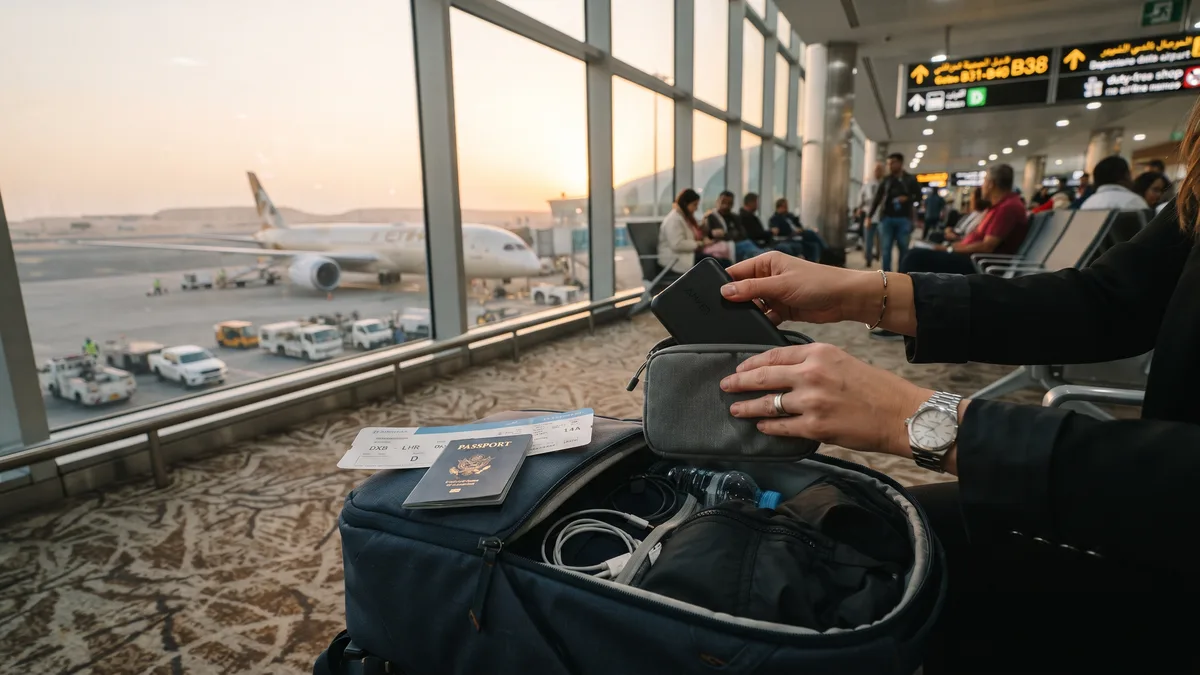
If you live in the UAE, there is a good chance a power bank goes into your bag every time you fly, whether it is a weekend in Muscat or a long-haul trip home. Since 1 October 2025, the rules on the four big UAE airlines have changed in the same direction: you can still bring a power bank, but you cannot use it on board. This guide sets out what Emirates, Etihad Airways, flydubai and Air Arabia say on their own websites as of 26 October 2026, how to read the watt-hour rating on your power bank, and what to pack so you are not asked to leave it at the gate.
The short version
- Carry-on only: no UAE airline accepts power banks in checked baggage.
- 100 Wh maximum per power bank on all four airlines, and the rating must be readable on the device for Emirates, Etihad and flydubai.
- One power bank per passenger on Emirates, Etihad and flydubai. Air Arabia's page does not state a number.
- No use on board: you cannot charge your phone from a power bank, or charge the power bank from the seat socket.
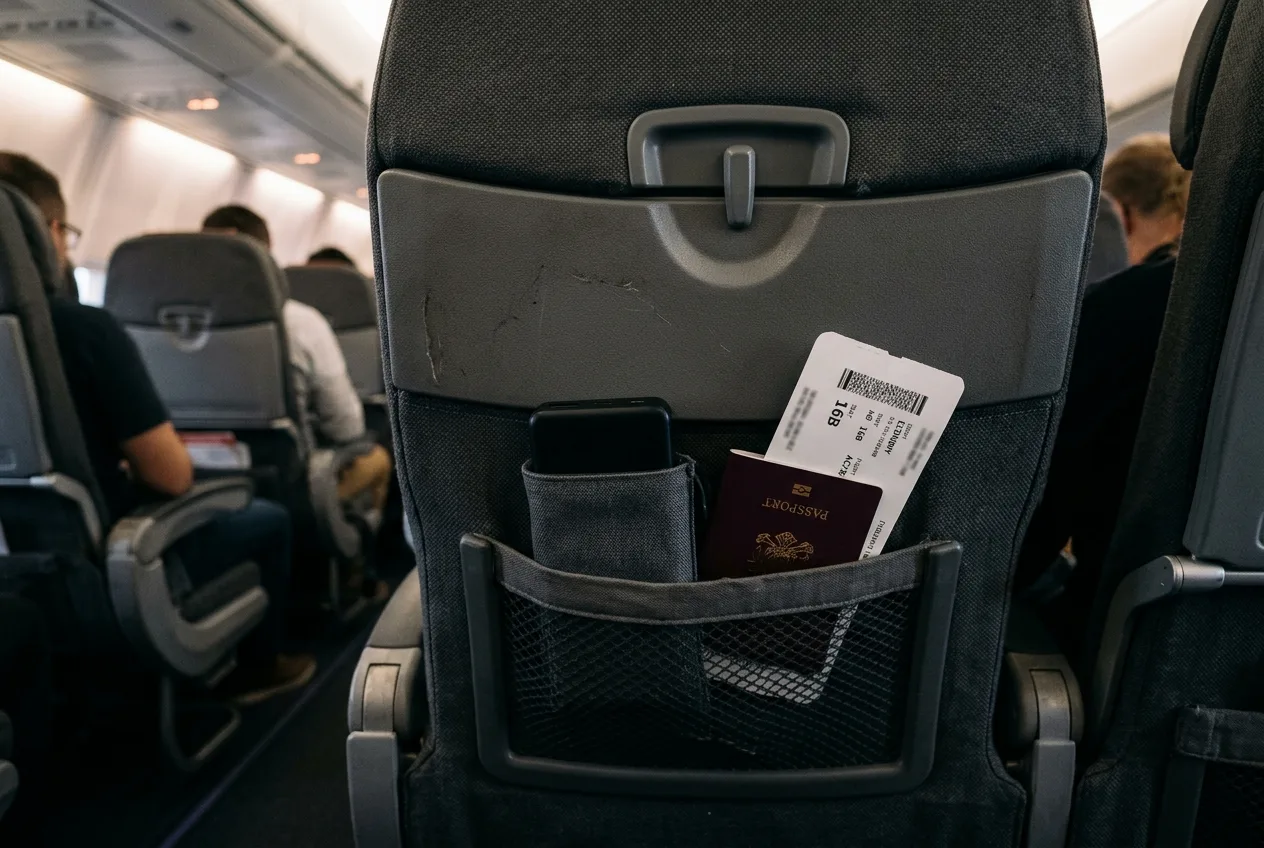
- Not in the overhead locker: keep it in the seat pocket or in a bag under the seat in front.
Power bank rules by airline
The table summarises each airline's published rules. Wording differs slightly between airlines, so the sections below quote what each one says.
| — | Emirates | Etihad Airways | flydubai | Air Arabia |
|---|---|---|---|---|
| Power banks allowed | 1 | 1 | 1 | Not stated on its page |
| Maximum rating | Under 100 Wh | 100 Wh or less | 100 Wh or less | 100 Wh (lithium-ion) |
| Rating must be marked | Yes | Yes | Yes | Not stated |
| Use on board | No | No | No | No |
| Charge from aircraft power | No | No | No | No |
| Where to keep it | Seat pocket or bag under the seat | Under the seat or seat pocket (Economy); seat storage (First and Business) | Under the seat or seat pocket | Seat pocket or bag under the seat |
| Overhead locker | No | Avoid | No | No |
| Checked baggage | No | No | No | No |
Emirates
Emirates banned the use of any power bank on board from 1 October 2025. Passengers may carry one power bank under 100 Wh, and its capacity rating must be available on the device. It cannot be used to charge personal devices, and it cannot be charged from the aircraft's power supply. It must go in the seat pocket or in a bag under the seat in front, not in the overhead bin. Emirates points out that it has in-seat charging on all its aircraft, and recommends fully charging your devices before you fly.
Etihad Airways
Etihad allows one power bank per passenger, rated at 100 Wh or less, with the rating clearly marked, labelled, embossed or printed on the device. Using it on board is strictly prohibited, including charging devices or charging the power bank from aircraft sockets. It must be switched off and protected from short circuits, for example in its retail packaging or a pouch. Power banks over 100 Wh are not permitted. Etihad asks Economy passengers to keep it in a cabin bag under the seat or in the seat pocket, and First and Business passengers to use the seat's storage compartment, rather than the overhead locker.
flydubai
flydubai's rules match Etihad's closely: one power bank per passenger, 100 Wh or less, rating clearly marked, switched off and protected from short circuits, no use on board, and storage under the seat or in the seat pocket. It says the rules apply whatever the device is called, whether power bank, portable charger, battery pack or power station, and that not following them may result in denial of carriage. Power banks must not be left in hand baggage that is checked in at the desk, so take it out first if your cabin bag ends up in the hold.
Air Arabia
Air Arabia treats power banks as spare batteries. They go in carry-on baggage only, must be individually protected against short circuits, and lithium-ion batteries must not exceed 100 Wh. On board, the power bank must stay switched off throughout the flight, in the seat pocket or a bag under the seat, not in the overhead locker. It cannot be used to charge any device, and it cannot be charged from the onboard power source. Its page does not give a per-passenger limit for power banks, so if you plan to carry two, ask the airline before you travel.
Why the rules changed
Airlines are responding to a rise in lithium battery incidents in the cabin. In its announcement, Emirates explained that an overcharged or damaged battery can go into thermal runaway, a self-accelerating rise in temperature that can lead to fire and toxic smoke, and that keeping power banks within reach lets cabin crew deal with an incident quickly. A power bank in a closed overhead bin is harder to spot and reach.
The global rules have tightened too. From 27 March 2026, the International Civil Aviation Organization (ICAO) limits passengers to two power banks each and prohibits recharging them during flights. Airlines can set stricter limits than that, which is why the UAE carriers allow only one.
How to check your power bank's watt-hour rating
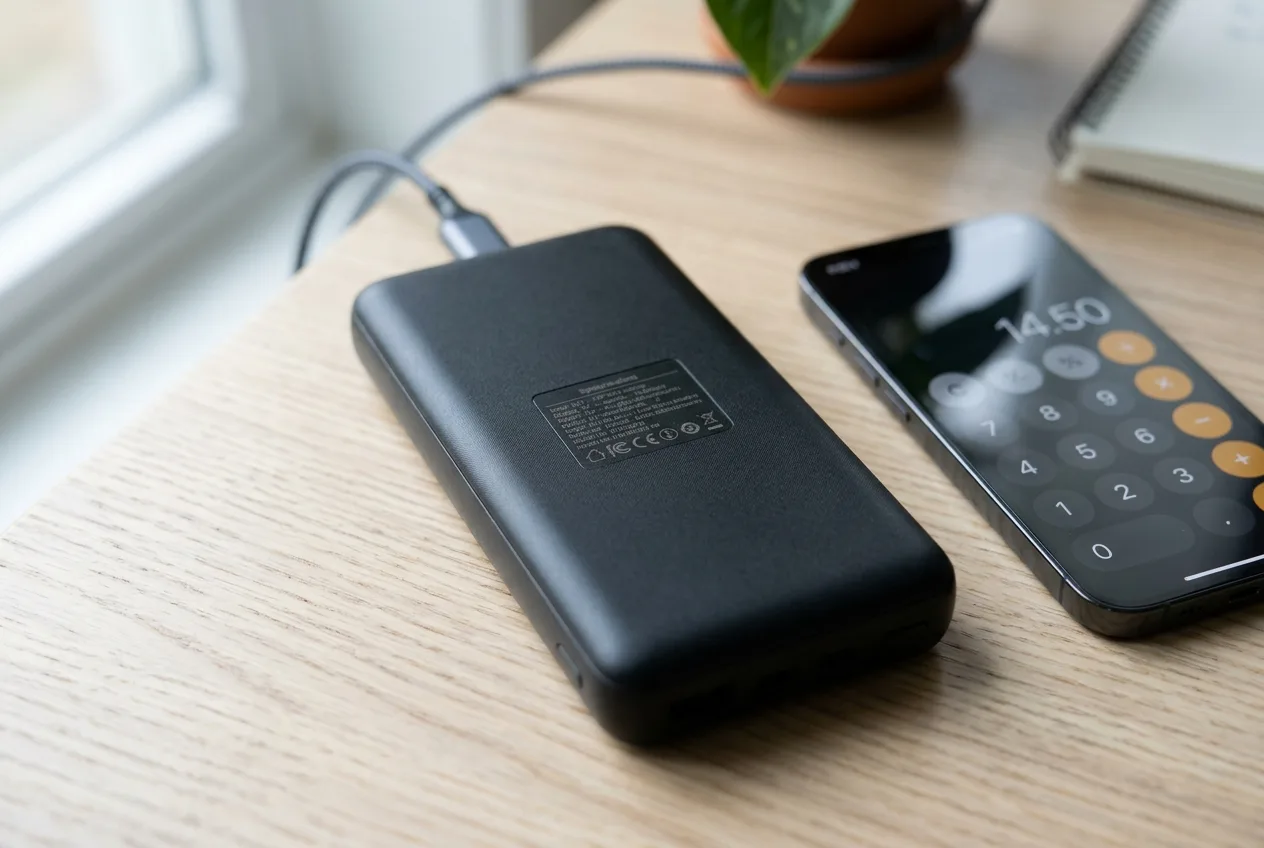
Most power banks are sold by milliamp-hours (mAh), but airline limits are in watt-hours (Wh). Look on the casing first: many power banks print the Wh rating next to the input and output figures. If only mAh is shown, the US Federal Aviation Administration gives a simple formula: watt-hours equal the milliamp-hours divided by 1,000, multiplied by the battery voltage. Most power banks use cells rated at 3.7 V.
- 10,000 mAh × 3.7 V ÷ 1,000 = 37 Wh: well within the limit
- 20,000 mAh × 3.7 V ÷ 1,000 = 74 Wh: within the limit
- 27,000 mAh × 3.7 V ÷ 1,000 = about 99.9 Wh: right at the limit, so expect questions
- 30,000 mAh × 3.7 V ÷ 1,000 = 111 Wh: over 100 Wh, not accepted on any of the four airlines
Use the battery voltage printed with the capacity, not the 5 V or 9 V USB output figure, which gives a misleading number. If the rating has worn off, Emirates, Etihad and flydubai can refuse the power bank because the rating must be visible. An unlabelled or swollen power bank should not travel at all.
What this means for UAE travellers
Charge before you leave home
With no charging from power banks in the air, plan your charge around the flight. Top up your phone and earbuds before you leave for DXB, DWC, AUH or SHJ, and use the airport or the seat socket where the aircraft has one. Emirates has in-seat charging on all its aircraft. On other carriers, do not assume every seat has a socket: check the aircraft type for your flight.
Pick the right power bank for travel
For most trips, a 10,000 mAh model is the practical choice: small, light and far below the limit. A 20,000 mAh model still fits under 100 Wh and is useful for long layovers or a day out at your destination. Large 'power station' style units are almost always over 100 Wh and stay at home. Our power bank roundup lists models with their capacity, and the UAE heat caveats that matter for anything with a battery.
- Our power bank guide, with capacity and UAE heat notes
- Our USB-C fast-charging cable guide, so a short charge before boarding counts
- Our noise-cancelling headphone guide for long flights
Connecting flights and codeshares
Rules follow the airline operating each flight, and Etihad notes that regulations may vary between airlines and destinations. If your trip combines a UAE carrier with a partner airline, check both. Some destinations add their own lists of recalled power banks: Etihad's page, for example, names specific models that cannot be carried on flights to or from India and South Korea.
Do not leave it in the car
UAE summers are hard on lithium batteries. A power bank left in a parked car or in direct sun can be damaged, and a damaged or swollen battery is exactly what airlines want kept off the plane. Store it indoors, and replace any power bank that is swollen, cracked or gets unusually hot when charging.
A pre-flight checklist
- One power bank, 100 Wh or less, with the rating readable on the casing
- Packed in your cabin bag, never in checked luggage
- Switched off, in a pouch or its box, ports protected from keys and coins
- Taken out of your cabin bag if the bag is checked in at the desk or the gate
- Placed in the seat pocket or under the seat after boarding, not in the overhead bin
- Phone and earbuds charged before you leave home
Buying a new power bank for the trip during the year-end sales? Check the Wh rating on the listing before you pay, and see our guides to the season's sales.
- Our 11.11 sale guide for the UAE
- Our guide to buying tech in the UAE: seller, warranty, Type G plugs and 220–240V
Sources
- Emirates' safety rules for customer usage of power banks onboard, now in full effect (30 September 2025), Emirates media centre
- Dangerous goods policy, Emirates
- Prohibited items and dangerous goods, Etihad Airways
- Dangerous goods, flydubai
- Hand baggage, flydubai
- Prohibited items, Air Arabia
- New power bank restrictions will safeguard international aviation (27 March 2026), ICAO
- Airline passengers and batteries, US Federal Aviation Administration
Frequently asked questions
Can I use a power bank on Emirates flights?
No. Since 1 October 2025, Emirates does not allow power banks to be used on board, either to charge devices or to be charged from the aircraft's power. You may still carry one power bank under 100 Wh in your cabin baggage.
How many power banks can I take on a UAE airline?
One on Emirates, Etihad and flydubai. Air Arabia's prohibited items page does not state a number, so ask the airline before travelling with more than one. ICAO's global limit, in force since 27 March 2026, is two per passenger.
Is a 20,000 mAh power bank allowed on flights from the UAE?
Usually yes. At the common cell voltage of 3.7 V, 20,000 mAh is about 74 Wh, below the 100 Wh limit. Check the Wh rating printed on your power bank, since the voltage can differ.
Can I put a power bank in checked baggage?
No. None of the four UAE airlines accepts power banks in checked baggage. If your cabin bag is checked in at the desk or gate, take the power bank out first.
Can I charge my phone from the seat socket?
Yes, where the seat has one. The rules apply to power banks, not to charging a phone directly. Emirates has in-seat charging on all aircraft; on other airlines, check your aircraft type.
Keep reading
Mobile accessories
Best Power Banks Under AED 200
Reliable portable chargers to keep your devices powered on the go.
Guide
Buying tech in the UAE
The checks that matter before you order tech for a home in the UAE.
Guide
11.11 sale in the UAE: which electronics are actually worth buying
Singles' Day is on Wednesday 11 November 2026. Here is what last year's sale looked like, which tech is a sensible 11.11 buy, and how to check a deal before you pay.
Mobile accessories
Best USB-C Cables for Fast Charging
Durable, fast-charging USB-C cables that won't let you down.
Headphones and earbuds
Best Noise Cancelling Headphones Under AED 750
Top ANC headphones under AED 750 for travel, work, and focus.
Guide
Sale seasons in the UAE
A calendar for UAE tech shopping seasons, pointed at guides rather than at countdown clocks.